Strona główna » Performances – Café Luna

Café Luna
UPCOMING PERFORMANCES:
19 March, 8:00 PM
20 March, 8:00 PM
TICKETS:
Tickets priced at 120 PLN can be purchased online. >>> CLICK
Please be punctual. Latecomers will not be admitted to the auditorium.
A story about the search for love presented in a queer, camp aesthetic inspired by the early work of the renowned Spanish film director Pedro Almodóvar.
„Café Luna” is a spoken-word and musical, comic-lyrical story about the search for love. This timeless, almost clichéd theme is presented here in an unconventional way — in a queer, camp atmosphere inspired by the early work of the renowned Spanish film director Pedro Almodóvar. All the songs woven into the plot come from his films, with new Polish lyrics written to the original melodies (rather than translations of the original texts).
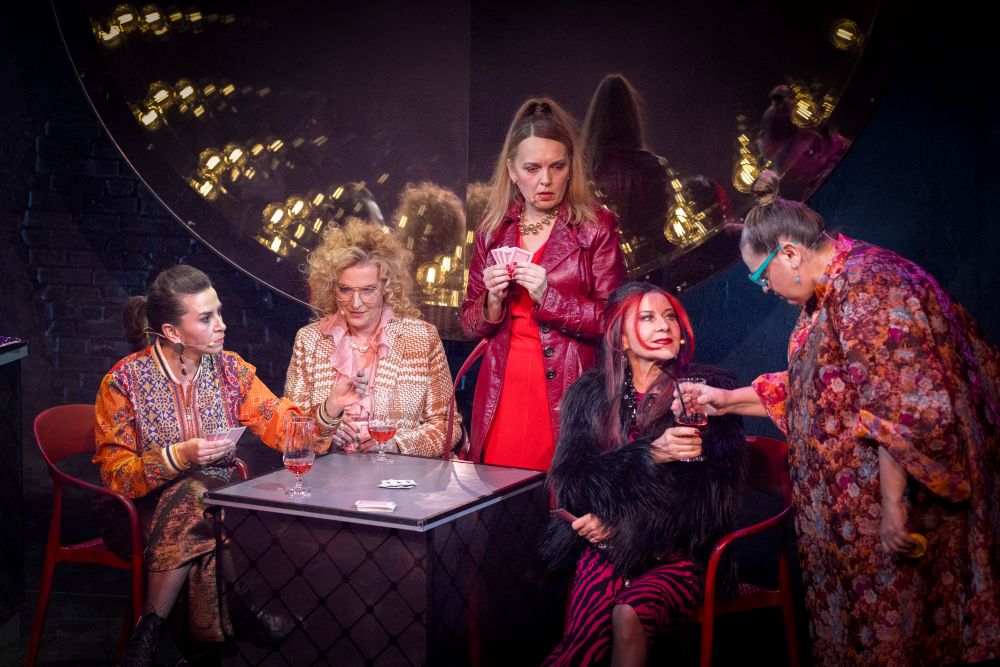
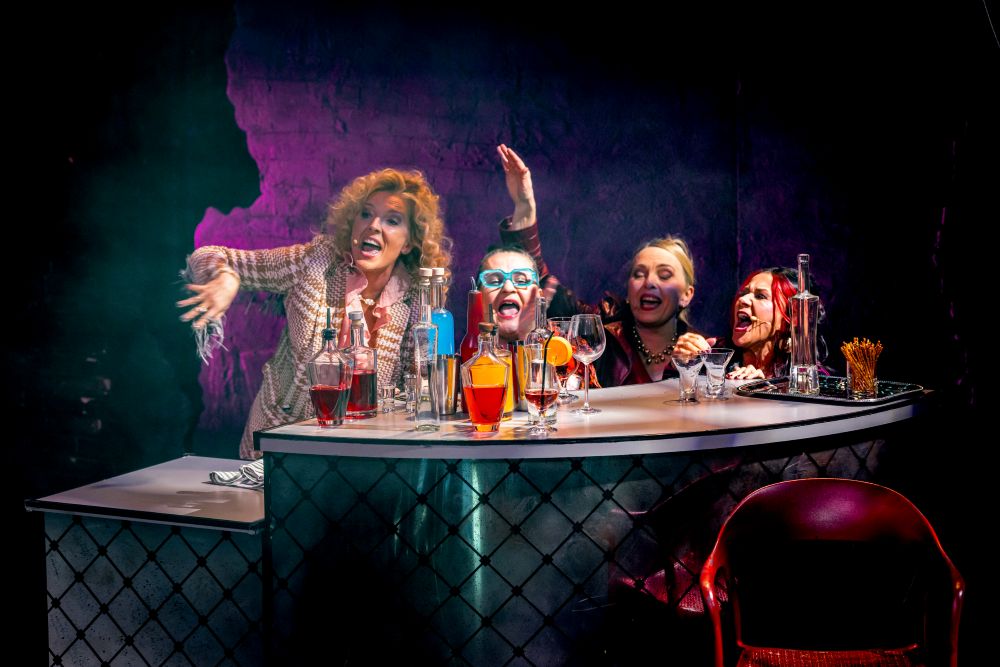
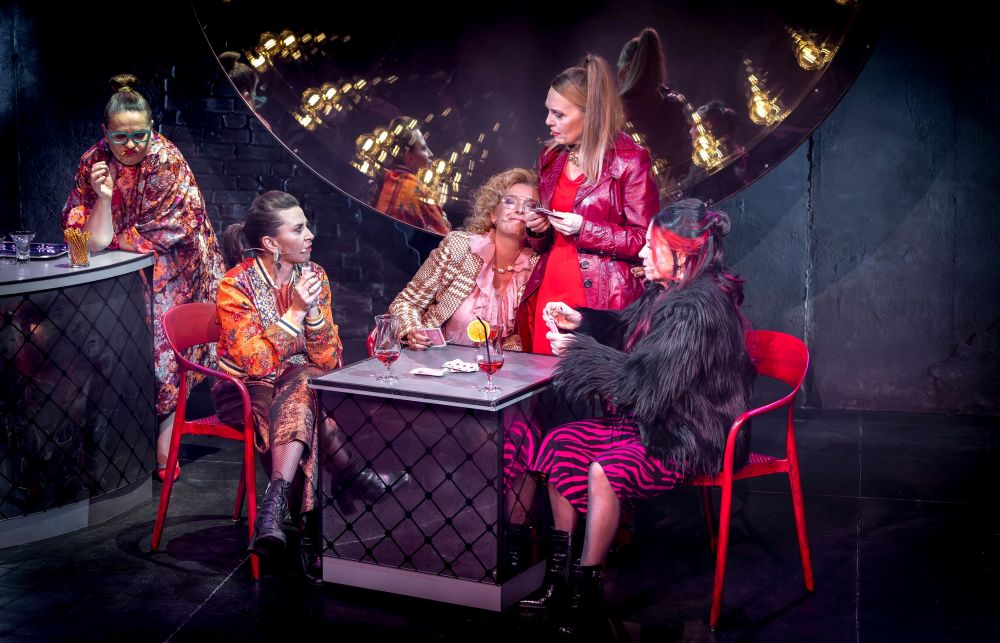
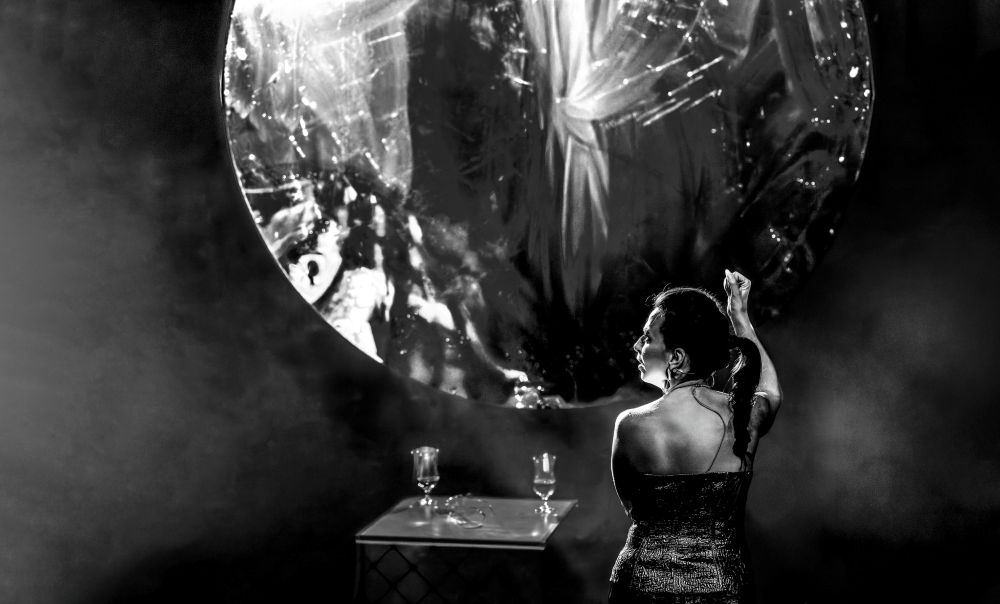
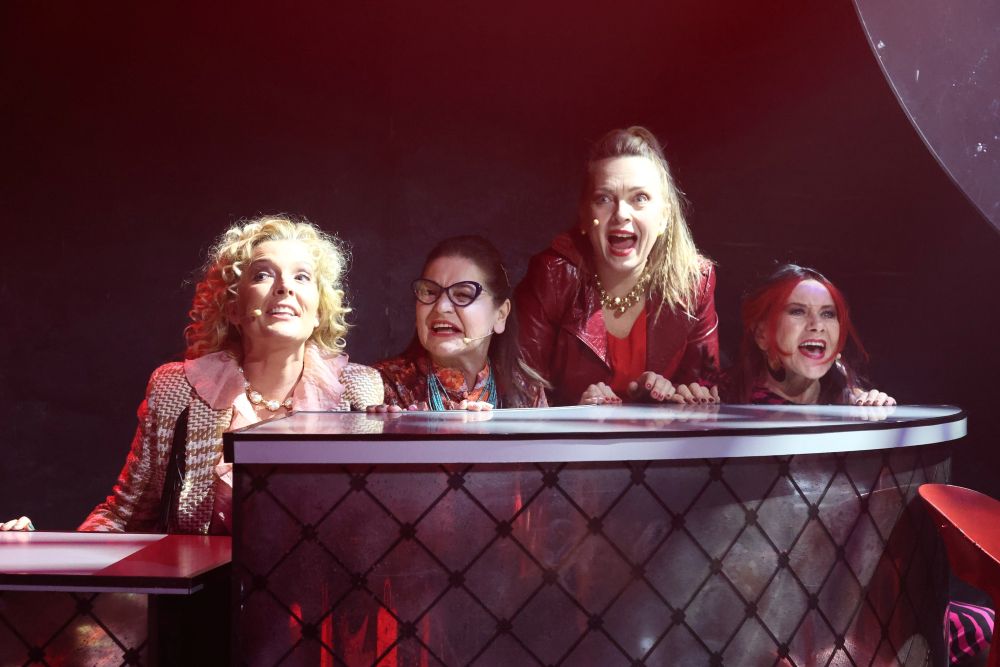
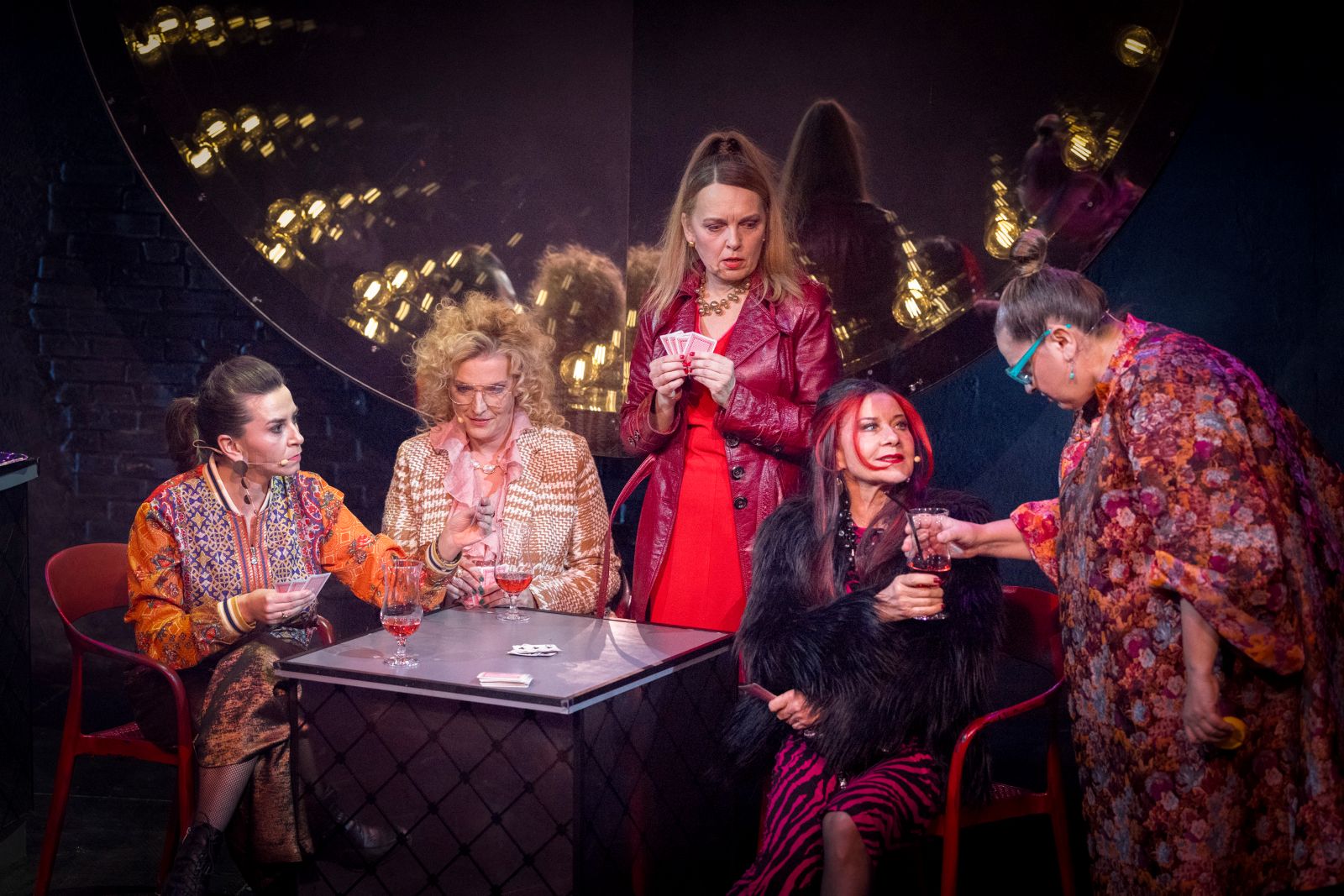
The plot may seem simple, but it is full of twists. Four single women — Carmela, Rosita, Bianca and Emma — meet every evening at the same time in the titular bar, Café Luna, owned by Lola. This seedy dive in an equally seedy part of town initially appears ordinary and painfully realistic, yet it soon becomes something else entirely: a space of memories, longing, rapture and despair, and even magic. Much like in Beckett’s famous play Waiting for Godot (of course, toutes proportions gardées), the characters come here simply to wait. Their loneliness is unbearable, and they keep watch for “the one,” hoping that by some miraculous twist of fate he will one day cross the threshold of this gloomy place.
The patriarchal pattern in which men gather to talk about women over a bottle of vodka and mock stereotypes of femininity is turned upside down. Here, it is the women who sit in the bar, drinking and indulging in irreverent jokes about stereotypes of masculinity. Yet they do more than just mock men — each of them shares her most beautiful memory of a great love that happened once in her life and that she herself destroyed through immaturity, foolishness or carelessness.
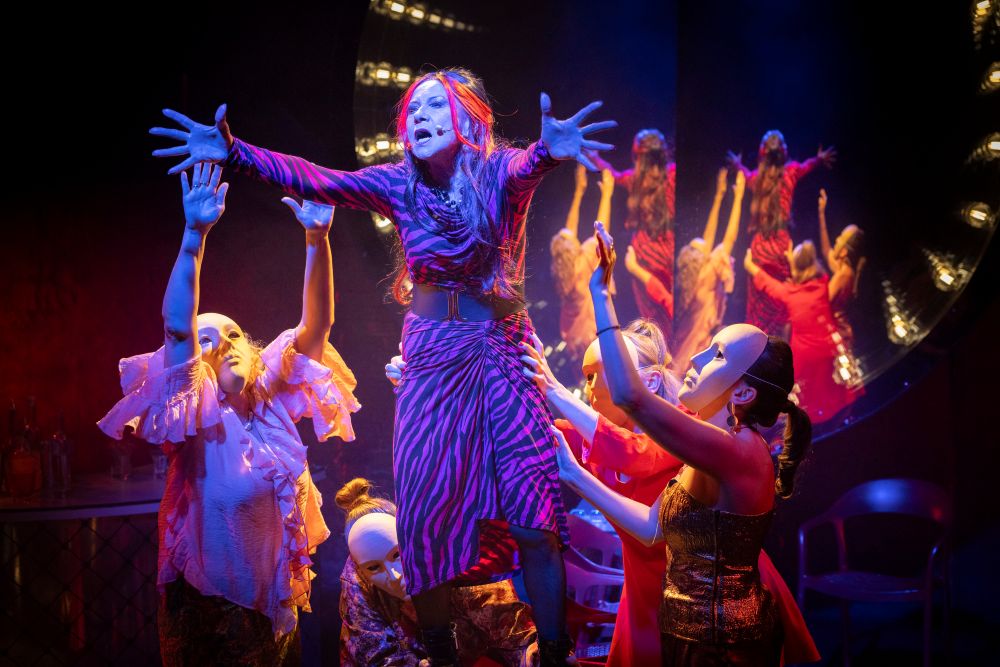
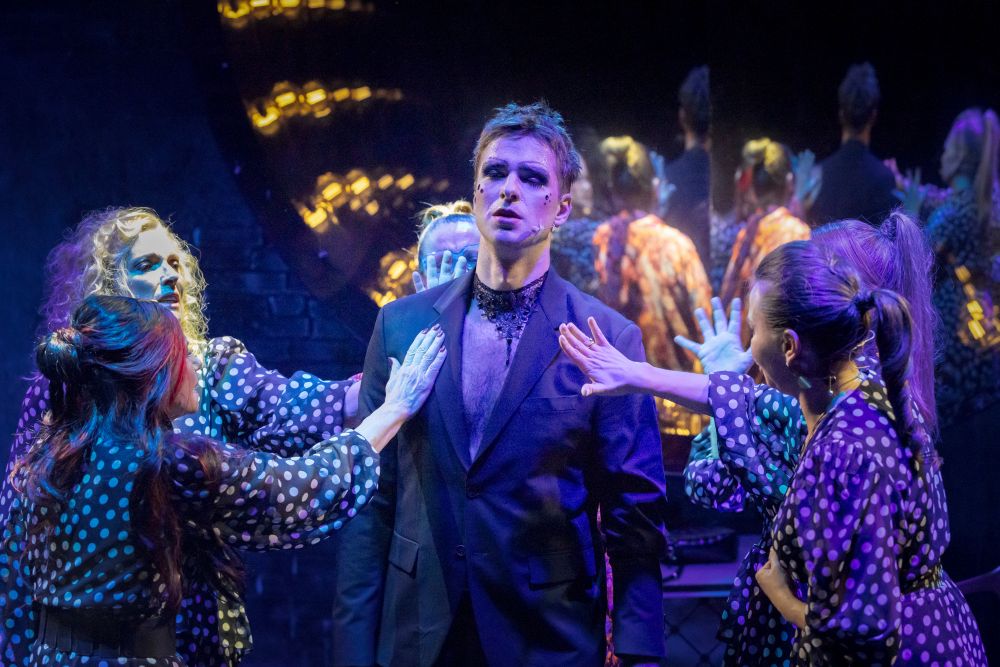
Although they all dream of a man (something that orthodox feminists might find hard to forgive), it does not mean they long for male dominance. What they seek is simply a normal, healthy relationship with a partner — something many feminist thinkers today acknowledge. Unlike in Beckett’s play, the longed-for, even prayed-for “Godot” finally arrives at Café Luna — but in a very surprising form. The mysterious guest grants the women’s wishes and then disappears in a magical way. They decide to keep returning to the bar every evening, patiently waiting for love that may, perhaps, one day arrive.
The play’s message may seem controversial, yet in today’s world — marked by discrimination, especially in the sphere of human feelings, where some are considered “worse” and others “better” — it is not without meaning. Even if it may sound banal: when love is real, it does not choose gender and it dissolves all divisions.
Co-financed by the European Union – NextGenerationEU.
Café Luna is a performance filled with music. Feelings are not spoken about here — they are sung.
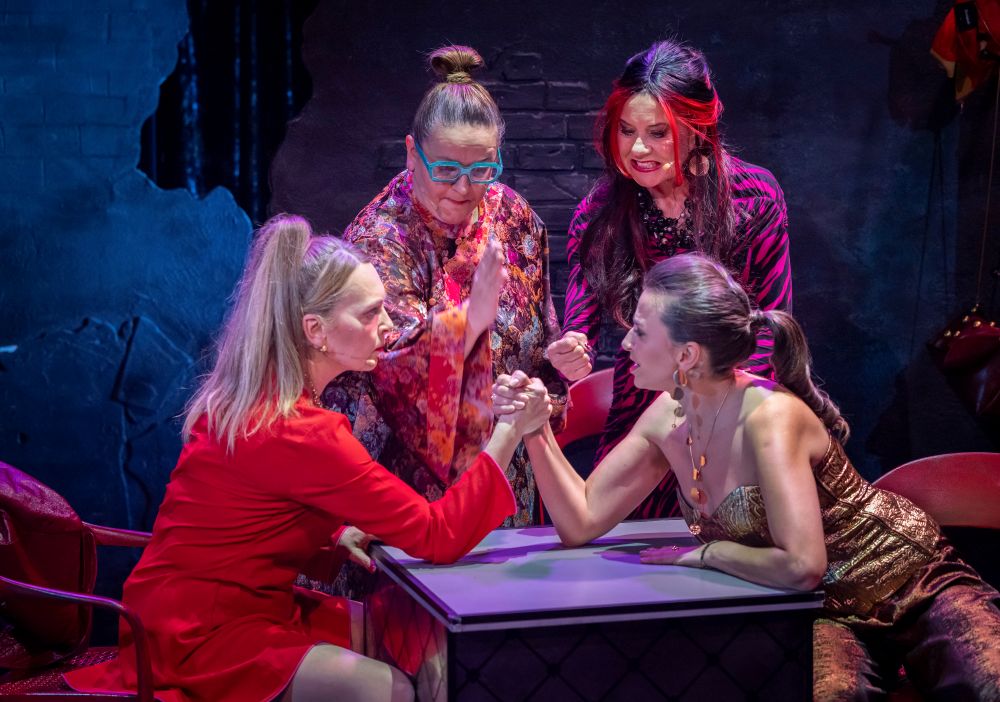
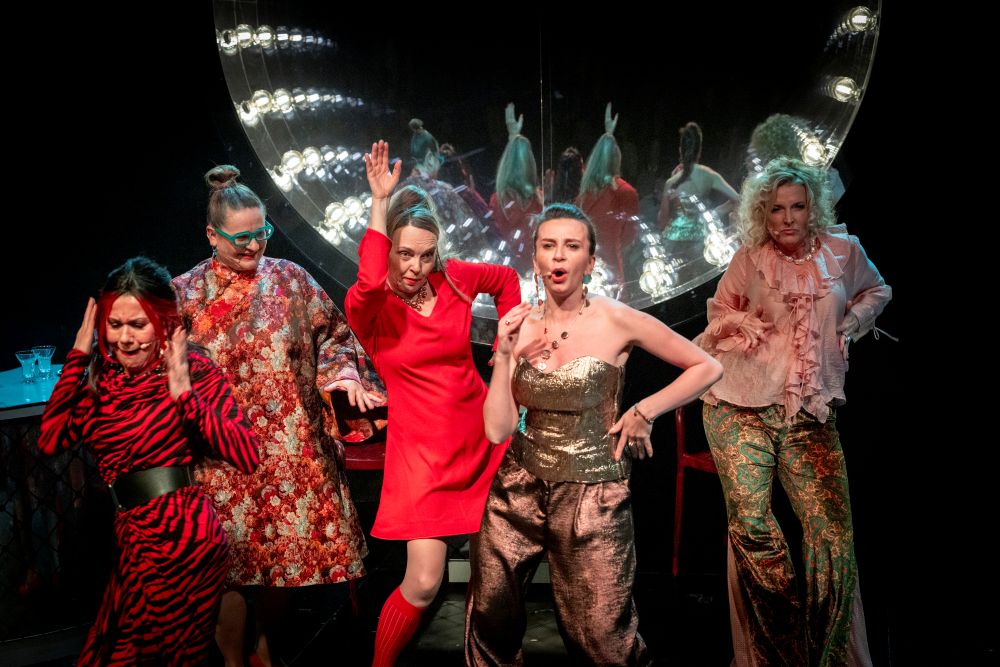
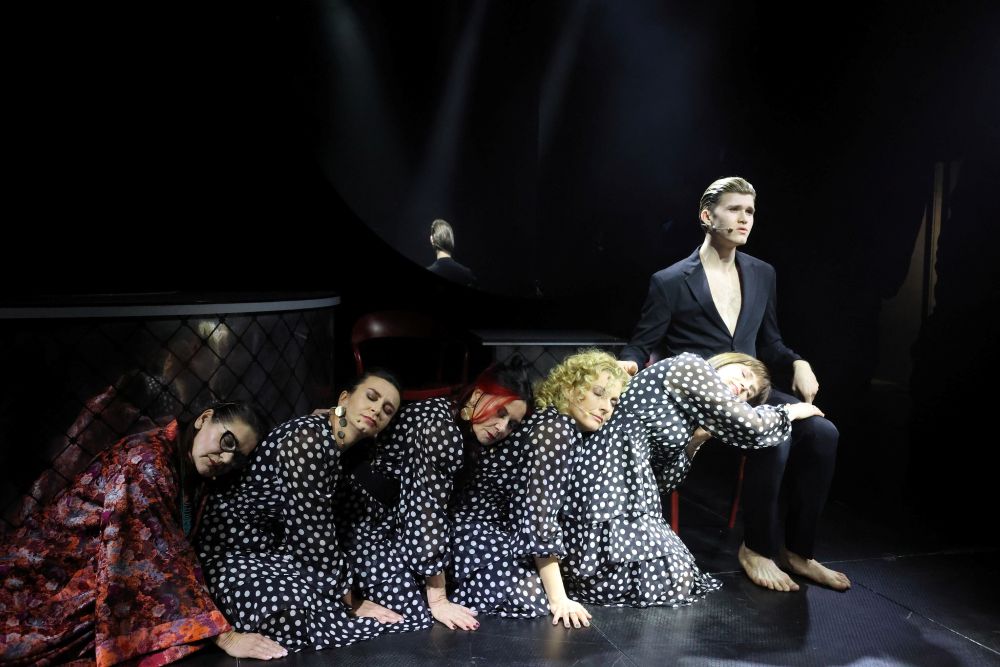
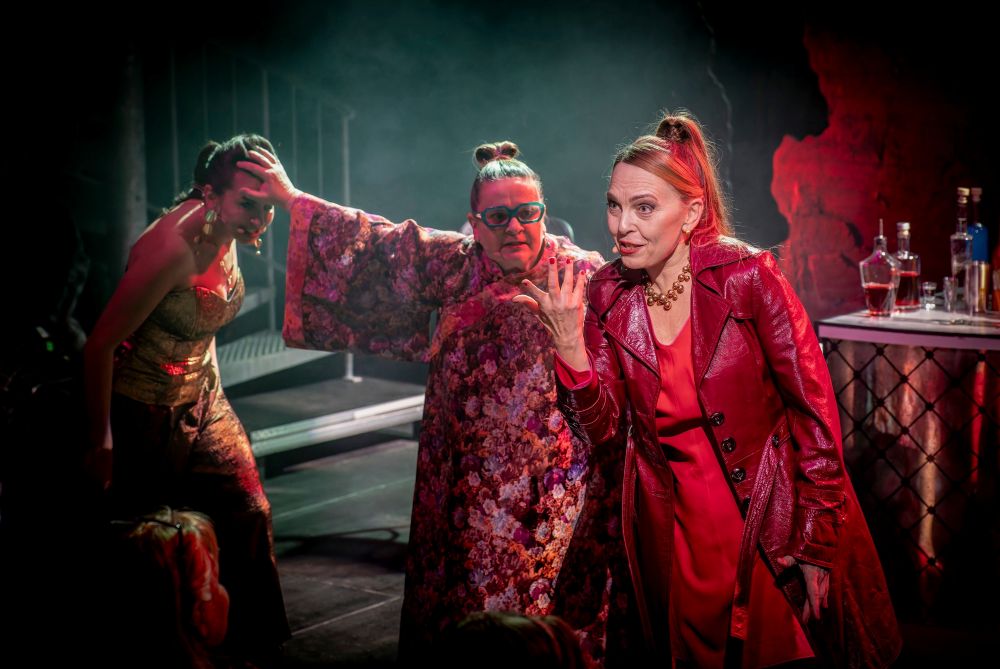
Inspirations from Almodóvar’s work are evident in the performance on every level: in the dialogues, the set design, and the costumes. Capturing on stage the unique atmosphere of the Spanish director is no easy task, and the credit belongs to the entire team. The leading roles (despite the presence of male musicians) are, of course, played by women. Four friends — Carmela (Bożena Zawiślak-Dolny), Rosita (Sylwia Chludzińska), Emma (Katarzyna Galica) and Bianca (Aleksandra Konior-Gapys) — meet in a charming, somewhat shabby dive bar run by Lola (Małgorzata Hachlowska). A night fueled by alcohol becomes the perfect opportunity to talk about unfulfilled love and the longing for genuine affection. Yet this is not a sad night of embittered women, but a lively, humorous ride through themes of relationships between women and men.
Café Luna is a performance filled with music. Feelings are not spoken about here — they are sung. The vocal parts are, in fact, among the strongest elements of the show. (…) The well-chosen cast brings together different temperaments and stage techniques, allowing the audience to appreciate the performers’ skills both in ensemble scenes and in individual showpieces.
Piotr Gaszczyński — Teatr Dla Wszystkich
Burzyńska writes successful middle-of-the-road dramas — the kind you can invite both a colleague on a postdoc and a visiting cousin to see.
The song lyrics and the narrative glue were prepared by Anna N-R. Burzyńska, my guru from my student days, who combines in her work what we literary tigers like best: literary theory with theatrical practice. I terribly envied her handsome, bearded husband. Burzyńska writes successful middle-of-the-road dramas — the kind you can invite both a colleague on a postdoc and a visiting cousin to see.
Maciej Stroiński – e-teatr.pl
Słuch zostanie uszczęśliwiony przez niezwykłą oprawę muzyczną.
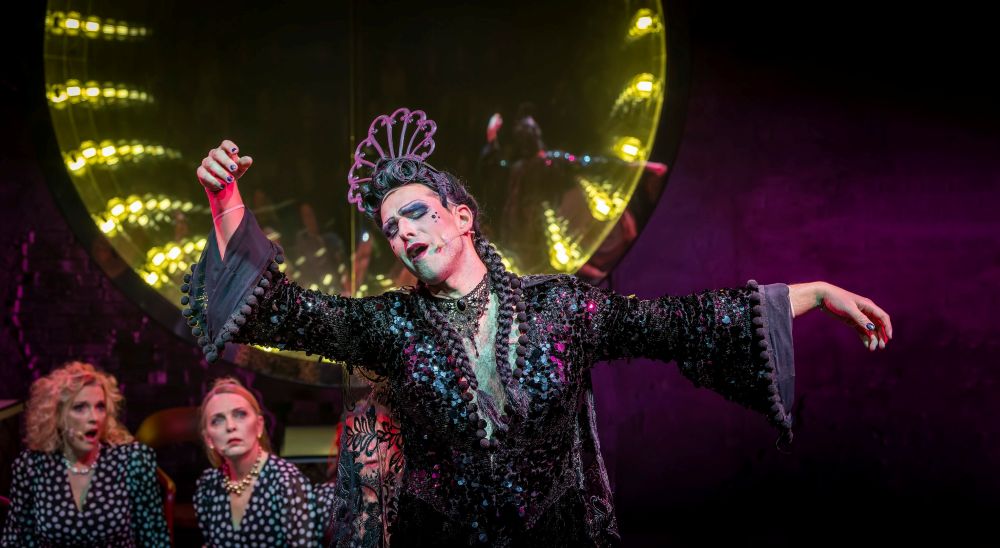
(…) a play that delights the senses. The eye can feast on colorful characters and distinctive makeup, while the ear is delighted by the extraordinary musical score.
Anna Bolek – kulturatka.pl
laywright and lyricist: Anna Burzyńska
Director: Józef Opalski
Musical direction, arrangements: Aleksander Brzeziński
Choreography / stage movement: Wojciech Dolatowski
Set and costume design: Aleksandra Reda
Lighting design: Michał Drozd
Vocal coaching: Justyna Motylska
Assistant director: Aleksandra Konior-Gapys
Assistant costume designer: Maja Łypik
Technical manager: Marcin Pięta
Lighting technicians: Michał Mrugacz, Robert Kania
Sound technicians: Krystian Gajewski, Artem Litviniuk
Technical support: Jerzy Bener, Marcin Liszka
Producer: Urszula Swałtek
Production support: Aleksandra Kupis-Bigaj, Agnieszka Skowronek, Ewa Socha
Promotion: Martyna Nowakowska, Agnieszka Gałczyńska, Aleksandra Mysiak, Sławomir Szczurek
CAST:
LOLA:
Marta Zoń (20 March)
Małgorzata Hachlowska (19 March)
CARMELA:
Bożena Zawiślak-Dolny
ROSITA:
Sylwia Chludzińska (20 March)
Anna Branny (19 March)
BIANCA:
Aleksandra Konior-Gapys
EMMA:
Katarzyna Galica
RICARDO:
Paweł Wolsztyński
Filip Owczarek (19 and 20 March)
Gran Ganga band:
Aleksander Brzeziński
Damian Mielec
Jakub Nieć
PREMIERE:
18–19 December 2025
RUNNING TIME:
90 minutes
PRACTICAL INFORMATION (ACCESSIBILITY)
LOCATION
Teatr KTO is located in a tenement building at 50 Zamoyskiego Street.
Public transport access: the nearest bus stop is Rondo Matecznego (600 m away), served by lines 144, 164, 169, 173, 179, 301, 304, 469, 513. The nearest tram stop is Smolki (200 m away), served by lines 8, 10, 18, 22, 50, 52, 62, 69, 76, 82.
The theatre can also be reached by bicycle (nearest ZTP bike racks: Zamoyskiego 50, Smolki 8) or by electric scooter (nearest mobility points: Zamoyskiego 39 and Werneńczyka).
PARKING
The theatre does not have its own parking lot. The nearest parking space for people with disabilities is located approximately 50 m from the entrance. Parking is free for holders of a disabled parking permit. The sidewalks at pedestrian crossings have lowered curbs.
BUILDING ENTRANCE
The entrance to the building is at ground level. There are no obstacles for wheelchair users.
Guide dogs and assistance dogs are welcome in the theatre and in all its spaces.
BUILDING INTERIOR
The ticket office with reception and the cloakroom are located in the main hall, about 5 m from the entrance door on the left. The ticket counter is lowered and accessible for wheelchair users. The auditorium and the ticket office are equipped with an induction loop.
Lift
The lift is located at the end of the corridor (on the ground floor, opposite the accessible restroom). The buttons are labeled in Braille and large print, and the lowest button is positioned at a height of 105 cm. The lift is equipped with voice announcements.
TEATR KTO STAGE
The theatre hall is accessible for people with mobility impairments and is located on the ground floor. An induction loop is available during the performance.
RESTROOM
An accessible restroom is located at the end of the corridor in the main hall on the ground floor. It is equipped with support rails and a baby changing table.