WINNERS OF THE 2ND EDITION OF THE BODY AND TIME FESTIVAL

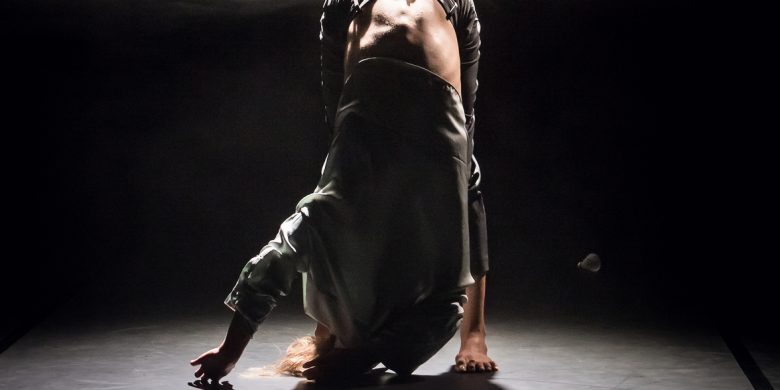
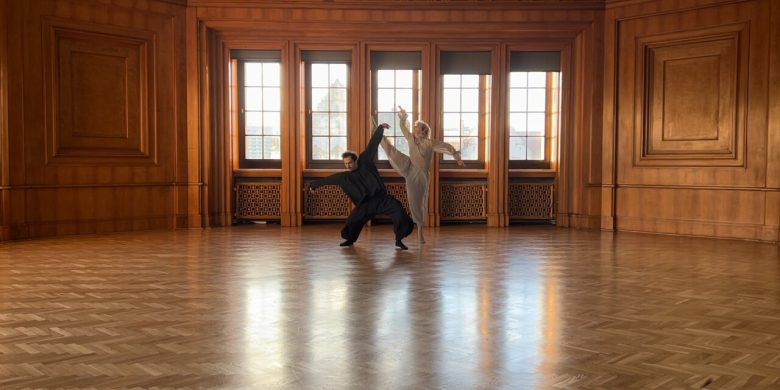
Osoba ubrana na czarno z ciemnymi włosami stoi na jasnym tle, z szeroko rozłożonymi ramionami i lekko pochyloną głową, badając ciało i czas w ekspresyjnej pozie tanecznej.
photo: Antoni Łętkowski

SPEECHLESS

SPEECHLESS explores the language of the body, acousmatics, gesture, and the body subjected to the discipline of language. Language and speech—linked to rhythm, sound, intonation, and breath—serve here as a point of departure, a spontaneous composition. Can something as personal and emotional as the human voice be presented as such—allowed to speak for itself, rather than be used to tell a story?

SPEECHLESS is an attempt to visualize the ephemerality of sound and movement woven around a dancing body. It is a double live act: sounds are collected from movement in space, while the phonosphere is created live by a performer–dancer and a performer–musician. Processed and natural sound, accumulation and looping of repetitive gesture and movement—here the sonic and visual layers compete for the viewer’s attention.

Concept and performance: Aleksandra Nowakowska
Live act: Andrzej Józefczyk

COMPETITION PERFORMANCES

Dzieciorób (Breeder)

The play tells the story of a group of young, bored Germans living in a monotonous apartment block whose routine is disrupted by the arrival of an outsider of Greek origin—Jorgos. His presence exposes suppressed prejudices, xenophobia, and violence. He becomes the object of gossip, fear, erotic fantasies, and aggression. Mocked and suspected of everything (rape, laziness, manipulation), he threatens their stagnation and the status quo.

The characters are not psychologically developed individuals; they function rather as social roles and carriers of discourse. They drift—unemployed, loveless, unable to form bonds. Their lives consist of a series of unproductive, repetitive gestures. When Jorgos appears, his “otherness” releases hidden tensions. The outsider becomes a symbol of destabilization, but also of a potentially salvific shock.

The characters perceive him as a physiological body—a sexual threat—and as a foreign body—a social threat. Sexuality in Dzieciorób is stripped of passion; it becomes a tool of domination, exchange, and frustration.

Director: Wiktor Frankowicz
Choreography: Michalina Machalska
Cast: Julia Długosiewicz, Zuzanna Piotrowska, Laura Berger, Julia Kazana, Weronika Stankiewicz, Filip Prokopowicz, Oskar Wojciechowski, Jan Wróbel, Jan Kowalczyk, Antoni Rzucidło

Duration: 40 minutes

Warning: The performance contains explicit language and scenes of violence.

Pięciu performerów na scenie ucieleśnia ciało i czas, przyjmując dramatyczne, emocjonalne pozy. Jeden z nich na pierwszym planie pochyla się do przodu, zasłaniając twarz dłońmi, podczas gdy inni wyrażają intensywność i ruch na ciemnym tle.
photo: private archive
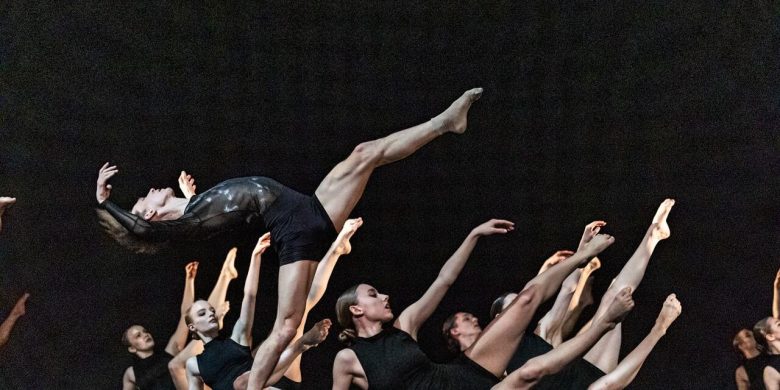
Dwóch tancerzy w czarnych strojach energicznie skacze po ciemnej scenie, a ich ekspresyjne ruchy zostały uchwycone w powietrzu. Tło jest czarne, co podkreśla, jak ciało i czas łączą się w ich dynamicznych pozach.
photo: Mariusz Marciniak

Everything Not Saved Will Be Lost

The central theme of the performance is memory—its storage, the preservation of information, and the effort to save resources from disappearance. The work draws inspiration from Anna Pavlova’s solo The Dying Swan and from video games.

The Dying Swan is a four-minute ballet, Anna Pavlova’s signature piece, performed all over the world—an icon of dance. If you enter this title into an internet search engine, you will not find images of swans, but of ballerinas. In this way, the tragedy of an animal has been appropriated by humans. Who still cares about disappearing birds? Active protection is needed so that they are not lost.

On stage: three dancers, an anatomical skeletal model, and a mock-up of a bird—the European roller. A record of memory: memory stored in the nervous system, in bones, and in soft tissues. The memory of dance which, although it is the most ephemeral of the arts, leaves lasting traces in the bodies of those who dance.

The title is not a quote from Paulo Coelho; it is a message from the end screen of popular console games, warning of the possible loss of unsaved data.

Everything not saved will be lost.
After all, it’s just a trick…

Creator: Zuzanna Kasprzyk
Duration: 45 minutes

Homo homini porcus

Homo homini porcus is a performance that confronts the experience of revolution—not only as an act of social rebellion, but also as a phenomenon embedded in the cyclical nature of life: like a storm preceding purification, or a fire that gives rise to renewal. At the heart of the work lies a central question:
does rebellion still make sense in a world that constantly seeks to tame what is wild, defiant, and alive?

In a reality dominated by control, inequality, and a growing sense of threat—both on a global and an internal scale—the creators seek to open a space for reflection and dialogue. The performance is inspired by George Orwell’s Animal Farm, which exposes the mechanisms of power feeding on hope and the desire for harmony. Today, much like in Orwell’s narrative, we observe how people become victims of a system that was meant to serve them.

Homo homini porcus presents dance as a form of protest, but also as a return to the primal language of the body—a language that remembers more than words.

Choreography, direction: Karolina Wensierska
Technical production: Łukasz Kowalski
Music: Filip Wyrwa
Costumes: Magdalena Tyran
Cast: Aleksandra Jóźwiak, Szymon Obolewicz, Olga Maria Piechocka, Anna Prętka / Antonina Manowska, Wiktoria Sobota / Alicja Weisskopf, Anna Wardęska, Karolina Wensierska

Duration: 40 minutes

Pięciu tancerzy w białych koszulach i czarnych spodniach wykonuje na scenie zsynchronizowany układ, klęcząc z uniesioną ręką. Dramatyczne oświetlenie i drewniana ławka podkreślają eksplorację ciała i czasu - ciała i czasu w ruchu.
photo: private archive
Osoba na scenie, dramatycznie pochylona do tyłu pod reflektorem w ciemnym otoczeniu, z telewizorem na podłodze po prawej stronie. Czarno-biała scena eksploruje ciało i czas, dodając jej teatralnej i tajemniczej atmosfery.
photo: Jola Staszczyk/Teatr Rozbark

WE GO BECAUSE THE PLACE WE BELONGED TO CEASED TO EXIST
BEFORE WE MANAGED TO NAME IT

Today’s world is being flooded by waves of migration. Since 2015, Europe has been experiencing a crisis. Never since World War II has such a high number of asylum applications been recorded. The need for forced migration continues to grow. People are moving en masse—travelling, relocating, being displaced—due to political, social, and environmental reasons alike. Along the road, the greatest dilemmas of our world unfold.

Walking—movement itself—becomes a fundamental mode of existence for many excluded individuals. Faced with the challenges posed by socio-political entanglements, as well as those that are internal and deeply human, we seek ways to address this moment of suspension: the moment in which a person on the move submits to an ongoing journey—one that is rhythmically and emotionally varied. They wander. They search. They try to find their place on earth.

The experience of migration is a transgenerational one. The transmitted post-memory of constant walking becomes an element shaping the identity of contemporary societies. Anchored in the realities of the 21st century, we wish to examine the tragedy of the refugee body. This is a story of attachment, of the inability to depart from an internalized, insular tradition. By referring to these experiences, we attempt to understand what generational truths the contemporary nomad reveals to us.

Concept, choreography, direction, performance:
Andżelika Fafanów, Zofia Żwirblińska

Duration: 45 minutes

KI

K
In human nature, nothing is accidental. One impulse gives rise to another; a single glance can change the course of an entire day. There is an inner instinct within us—something older than ourselves, something that knows. It guides us like the echo of an ancient voice—sometimes a whisper, sometimes a cry. At times we move in harmony with it—then every decision flows like breath. And at other times—too dazzled by noise—we lose the signal and walk against the wind, not knowing why.

I
Sometimes the smallest movement is enough—a tremor of the hand, a breath in a different rhythm. The human body remembers more than the mind has had time to forget. How not to strive for effect, but to trust what is real—what flows from within, from muscles, from emotions. How not to strike a sound, but to let it pass through us—as if it were the one dancing us. How to draw close to another person without touch—through presence, attention, the tenderness of a gaze. How to stop pretending that the stage is theatre—and simply be. For in human nature lie movement, relationship, and the desire to be seen… even if only by oneself.

Creators: Iga Włodarczyk, Katarzyna Zakrzewska

Duration: 7 minutes

Dwóch tancerzy w ciemnych strojach występuje na słabo oświetlonej scenie, eksplorując tematy ciała i czasu. Jedna z nich stoi wyprostowana, podczas gdy druga odchyla się do tyłu, wspierana przez pierwszą, tworząc dramatyczną pozę na surowym czarnym tle.
photo: private archive
Osoba w nagim body klęczy na białej, zakrzywionej platformie, trzymając błyszczącą fioletową maskę na twarzy na ciemnym tle, rejestrując grę ciała i czasu.
photo: private archive

MG

MG was created out of an interest in the transmission of trauma and social role models on a cellular level—a process that for centuries has been the result of forcing people in female bodies to perform normative femininity on biological, psychological, and social levels.

Splitting and fracture, repression, the coexistence of persona and shadow, and the transmission of knowledge on a cellular level are the core ideas accompanying the creation of MG. The work exists at the intersection of installation, performance, bio-object, and choreography. It is a piece with qualities of meditation, trance, a subtle commentary on reality, and a visual installation.

Direction, choreography, phonosphere: Piotr Sędkowski
Space, lighting: Jerzy Basiura
Consultation and creative collaboration: Dominika Wiak, Marcin Miętus, Witold Kawecki
Creation, performance: Magdalena Kawecka, Adrianna Mrowiec / Agata Jędrzejczak

Duration: 40 minutes

MURMURATION

They whirl in dance, high in the open sky.
When in a single rhythm their shapes intertwine.

MURMURATION is a diploma performance by Klaudia Czenczek, a graduate of Choreography and Dance Techniques (consultations: Katarzyna Migała).

The performance is inspired by the phenomenon of murmuration.

Creator: Klaudia Czenczek

Duration: 12 minutes

Pięciu tancerzy w brązowych kostiumach wykonuje ekspresyjne, współczesne ruchy na słabo oświetlonej scenie, każdy z nich przyjmuje unikalną pozę z rękami i nogami wyciągniętymi w różnych kierunkach, badając związek między ciałem i czasem.
photo: Radosław Kubiak, Festiwal Sfera Ruchu
Osoba w ciemnej pelerynie dramatycznie unosi jedną rękę na słabo oświetlonej scenie, trzymając stojak na kroplówkę - uderzające tableau eksplorujące ciało i czas. Dwie postacie bez koszulek pozostają w tle, pod czerwonym X na czarnej ścianie, intensyfikując teatralną scenę.
photo: private archive

The Longest Shift in the World

The Longest Shift in the World draws inspiration from the 2010 mining disaster in San José, Chile, when 33 men spent 69 days trapped underground. Rather than recreating the media narrative, the performance transforms this extreme experience into a space for reflection on human endurance, masculinity, and the fragile bonds that emerge in moments of crisis. The stage becomes a laboratory of bodies—a collective organism negotiating closeness, touch, and survival, revealing unexpected forms of care and intimacy. Wach shifts the narrative from language to movement, choreography, and the raw presence of the performers, inviting audiences to experience the tension between isolation and community, despair and resilience.

Director: Piotr Mateusz Wach
Music: Michał Smajdor
Choreography: Piotr Mateusz Wach, Szymon Dobosik, Daniel Leżoń, in collaboration with the ensemble
Costumes: Kamila Wdowska
Artistic supervision: Michał Borczuch
Tantric workshop: Daniel Leżoń
Operatic aria performance: Małgorzata Walenda
Photography: Magda Woch, Jakub Kotynia
Cast: Banaś Bartłomiej, Bandyk Szymon, Bielat Oskar, Bielawski Michał, Chudzik Kacper, Dobosik Szymon, Gołuch Artur, Gudanek Armando, Jaruszowic Antoni, Kestranek Grzegorz, Kondel Marcel, Kostow Krystian, Kotynia Jakub, Księżopolski Rumi, Leżoń Daniel, Madeja Philip, Pacan Leon, Paczkowski Adam, Poznański Jakub, Raczek Aleksander, Rychlak Franek, Samogranicki Jakub, Sarata Jan, Siemieniec Łukasz, Sojka Patryk, Szeląg Aleksander, Tasarz Igor, Tobolski Mikołaj, Urbaniak Filip, Walenda Małgorzata, Węgrzyn Filip, Woch Magda, Wojciechowski Adam, Wójcik Artur, Załuga Julek, Zinkiewicz Grzegorz, Olszański Dusiek

Duration: 65 minutes

Warning: The performance uses smoke and loud music. It contains scenes of nudity.


Ptasiek (Little Bird)

Ptasiek, the main character, believes he is a canary. The attempt to bring him back to the human world becomes a challenge—but can you take away someone’s wings when they are certain they can fly?

Creator: Andrei Kamarou

Duration: 8 minutes

Dwoje tancerzy baletowych, kobieta i mężczyzna, występuje na scenie, a ich minimalne jasne ubrania i dramatyczne fioletowe oświetlenie podkreślają elegancję ciała i czasu, gdy z wdziękiem wyciągają ramiona na ciemnym tle.
photo: Kazimierz Żdziebło
Osoba ubrana na czarno z ciemnymi włosami stoi na jasnym tle, z szeroko rozłożonymi ramionami i lekko pochyloną głową, badając ciało i czas w ekspresyjnej pozie tanecznej.
photo: Antoni Łętkowski

SPEECHLESS

SPEECHLESS explores the language of the body, acousmatics, gesture, and the body subjected to the discipline of language. Language and speech—linked to rhythm, sound, intonation, and breath—serve here as a point of departure, a spontaneous composition. Can something as personal and emotional as the human voice be presented as such—allowed to speak for itself, rather than be used to tell a story?

SPEECHLESS is an attempt to visualize the ephemerality of sound and movement woven around a dancing body. It is a double live act: sounds are collected from movement in space, while the phonosphere is created live by a performer–dancer and a performer–musician. Processed and natural sound, accumulation and looping of repetitive gesture and movement—here the sonic and visual layers compete for the viewer’s attention.

Concept and performance: Aleksandra Nowakowska
Live act: Andrzej Józefczyk

S T O R I E S

S T O R I E S is a dance performance balancing on the border between reality and abstraction. The creators lead the audience through a labyrinth of worlds—internal and external, real, natural, and constructed. They pose questions about the definition of reality, returning to the motif of childhood play. Where does reality end and imagination begin? How do technology, human nature, emotions, and relationships intertwine to create new dimensions of existence? How does “technological loneliness” affect us?

S T O R I E S is a story about returning home—a place where our inner world meets an ever-changing external reality. It is a reflection on how overlapping worlds shape our identity and the way we experience reality.

Choreography and performance: Ewelina Cieśla, Katarzyna Niżnik
Movement consultations and visualizations: Iga Szczepańska-Gieracha
Lighting direction: Michał Stenzel, Ewelina Cieśla

Duration: 40 minutes

Osoba w czarnym stroju stoi pod czerwonym reflektorem przy betonowej ścianie, z jedną ręką wyciągniętą do przodu, ucieleśniając motyw ciała i czasu. Druga ręka, częściowo widoczna w ciemności, sięga w ich kierunku z prawej strony.
photo: Julia Karczewska
Dwie tancerki w nagich trykotach eksplorują ciało i czas poprzez ekspresyjne, nowoczesne pozy na minimalistycznej, dobrze oświetlonej scenie. Jedna z nich jest przykucnięta z ręką na podłodze, podczas gdy druga wyskakuje za nią z gracją na prostym tle.
photo: Aleksandra Staszczyk/Teatr Rozbark

Trophies

Through language, humans transform the world—taming nature and assigning living beings the status of objects. Where nature builds relationships and balance, we impose a brutal simplicity: predator and prey. What is a trophy, really? Does obtaining it hold any value? Or is it nature that sets the terms—and takes more than it allows us to take?

Choreography: Julia Bentkowska, Julia Litwin
Dancers: Julia Bentkowska, Julia Litwin
Costumes: Wiktor Krajcer
Music: Fernando Corona – Muim, When Doves Cry (FX) – Nature Sounds

Duration: 5 minutes


ACCOMPANYING EVENT

Mother

Mother explores the boundaries between the human and the digital, posing questions about how technology influences creativity and the perception of the body. The motif of generativity unfolds through dance, in which the body and artificial intelligence interact with one another, pushing the limits of performance.

At the heart of Mother lies a reflection on the symbiotic relationship between humans and technological innovation—on how these interactions can transform human identity and experience. Through movement and interaction with artificial intelligence, the performance invites reflection on new forms of expression and connection emerging in the digital age.

The integration of technology with contemporary dance opens up new artistic horizons, transforming performance into an interactive and dynamic experience. By using advanced software such as Stream Diffusion, the work not only enriches its visual layer, but also brings to life a fully-fledged partner that collaborates with the performers in real time. Technology thus becomes more than visual support—it plays a fundamental role in the co-creation process, stimulating innovation and intensifying the audience’s emotional experience.

A driving force behind the choreographic process in Mother is the phenomenon known as prompting. This technique allows choreographers to generate movements and sequences in real time through immediate interaction between dancers and incoming instructions. Prompting may take verbal, visual, or auditory forms, encouraging spontaneous and creative responses from both the performers and the machine.

Curator and project coordinator: Giovanni Sabelli Fioretti
Creative production: Giuseppe Esposito
Dance: Marianna De Vito, Maia Joseph
Creative programming: Martyna Chojnacka
Sound and music: Enrika Myskovskaja (eNμ)
Dramaturgy and live facilitation: Giovanni Sabelli Fioretti
Lighting design: Niels Plotard
Graphic design: Maciej Kodzis
Photography: Jaime Musso
Production: Perypezye Urbane

The project was developed with the support of the S+T+Arts EU programme of the European Commission, the Italian Ministry of Culture, and SIAE – “Per chi crea” 2023 and 2024.

Osoba w czerwonym stroju pochyla się głęboko do przodu na ciemnej scenie, jej ramiona są luźne, a głowa niewidoczna, oświetlona pojedynczym źródłem światła - uderzająca eksploracja ciała i czasu.

FESTIVAL JURY

Kobieta o długich brązowych włosach stoi pewnie przed ciemnymi zasłonami, uosabiając ciało i czas w czarnym płaszczu, butach i stroju, z rękami na biodrach. Na podłodze widoczny jest kabel.

Ilona Maria Gumowska 

Dancer, choreographer, dance educator, psychologist. She is a graduate of the Institute of Choreography and Dance Techniques at the Academy of Music in Łódź, where she has been a lecturer for the past eight years. As a dancer, she has collaborated with artists such as Daniel Abreu, Roberto Olivan, Krystian Lada, Tomasz Wygoda, Mariusz Treliński, Jacek Przybyłowicz, Abhilash Ningappa, Kaya Kołodziejczyk, Michał Walczak, Jacek Gębura, Karolina Kroczak, and Marcin Wrona. She has performed on numerous Polish and international stages, including La Monnaie in Brussels, Theater an der Wien in Vienna, the Royal Swedish Opera in Stockholm, Teatr Rampa in Warsaw, and Teatr Muzyczny Capitol in Wrocław. For over five years, she has been performing with the Polish National Opera (Teatr Wielki – Opera Narodowa) in Warsaw, and since 2020 she has been collaborating with Barrowland Ballet in Glasgow. She is the author of choreographies for numerous dance productions, a director of stage movement, and a researcher of dance trance. In her artistic practice, she draws on Arnold Mindell’s process-oriented approach and the concept of the dreaming body, as well as Alexander Lowen’s grounding and energetic exercises. In dance, she is fascinated by strong physicality and deep presence. She seeks expression within bodily extremes, balancing on the threshold between what is known and comfortable and what is risky and yet to be discovered.

Mężczyzna z brodą i krótkimi włosami, ubrany w skórzaną kurtkę, opiera się swobodnie o poręcz i uśmiecha się. Czarno-białe zdjęcie uchwyciło moment, w którym ciało i czas subtelnie przeplatają się na rozmytym tle wnętrza.

Eryk Makohon

Choreographer, dancer, dance educator, creator and leader of the Kraków Dance Theatre. He holds a PhD in film and theatre arts and lectures at the Faculty of Dance Theatre of the Stanisław Wyspiański Academy of Theatre Arts in Kraków. He is a recipient of a scholarship from the Minister of Culture and National Heritage and a three-time laureate of Kraków’s most important theatre award, the Stanisław Wyspiański Award. He is the creator of dozens of performances and numerous educational projects. He is a graduate of primary and secondary music schools, studied architecture at the Cracow University of Technology, and completed studies in dance theory at the Fryderyk Chopin University of Music in Warsaw. As a dancer, he collaborated with the Silesian Dance Theatre and its founder, Jacek Łumiński. In recent years, his professional activity has included numerous creative projects and collaborations with Polish and international artists, among them W&M Physical Theatre (Canada), Idan Cohen, Anna Konjetzky, Ayrin Ersoz, and Sjaron Minailo, as well as cooperation with many cultural institutions, including the Royal Opera in Oslo, Capella Cracoviensis, Sinfonia Varsovia, the Manggha Museum, the POLIN Museum of the History of Polish Jews, the Juliusz Słowacki Theatre, the Krakow Festival Office, the Academy of Performing Arts in Prague, Teatr Groteska, the Institute of Polish Culture, Teatr Pinokio, and many others. He is the creator and curator of the dance presentation programme “Rollercoaster”, implemented at the Tadeusz Kantor Art Documentation Centre Cricoteka in Kraków. For many years, he has collaborated with Teatr KTO, creating choreography for both street and stage productions. Performances featuring his movement and choreography have been presented and awarded worldwide. He develops his own educational projects and programmes supporting young choreographers. He is the founder of the Kraków Dance Theatre—an organisation representing an alternative operational model based on building networks of cooperation with local and international institutions and supporting independent artists. As a choreographer, he is a recipient of prestigious awards, and his performances have been showcased at major artistic events around the world. He is a member of the Programme Council of the National Institute of Music and Dance.

Kobieta o jasnobrązowych włosach ubrana w jasnoniebieską marynarkę, beżowe spodnie i białe trampki siedzi w kucki na podłodze wyłożonej kafelkami, uśmiechając się delikatnie do kamery. Minimalistyczne tło podkreśla harmonię między ciałem i czasem.

Marta Wołowiec

Choreographer, performer, dancer, certified dance instructor, and dance producer. She is the founder and president of the Łagodnie Foundation and the curator and initiator of numerous local, national, and international events in the fields of dance and choreography. Her work has been presented on stages in Poland and abroad. She is the author of many solo and collective performances. Her most recent works include WoW, Tens, and Lil. She is currently preparing for her next premiere, which will be presented at Teatr KTO on 21 November. In addition to her own projects, she also creates choreography and stage movement for theatre productions as well as for films. She perceives dance and choreography as an experience of VISIBILITY—a space that enables the awakening of mutual attentiveness to contact with one’s own body and the collective body. She explores energy and progressive, trance-like movement, seeking authenticity in every stage action. Each project is, for her, an opportunity to discover a new choreographic language. More information: www.martawolowiec.com

About the Festival

Uśmiechnięty mężczyzna w niebieskiej koszuli w kwiaty i czerwonych okularach mówi do mikrofonu na scenie o ciele i czasie, trzymając papiery. Za nim stoi kilka osób. W tle znajduje się czerwono-biały ekran prezentacyjny.

After the strong interest in last year’s festival—already evident at the application stage during the open call—it became clear to us that the festival had to continue. Observing a new audience attending the festival events in such large numbers, responding so vividly to what was presented on stage, and speaking up so boldly during post-performance discussions—during one of which, carried by this wave of positive emotions, I announced that there would be a second edition—I can say today: I do not regret it.

Teatr KTO has always been a place open to new aesthetics and forms—those that have not always found space or understanding within the mainstream theatrical circuit.

Jerzy Zoń
Director of Teatr KTO

This year’s festival line-up positions itself both on the side of nature and against it. We enter nature not to idealize it. What interests us is not only well-being, but nature as a force—wild, raw, pulsing beneath the skin. A tension that drives action against logic and comfort.

We want to touch the core. To explore identities, inclinations, and wildness in a world dominated by urbanization. We will dismantle nature into muscles, instincts, and myths.

The body is our point of contact. On one side—rhythms, cycles, elements; the body as part of an ecosystem. On the other—human nature: emotions, drives, and the tensions between what is considered “natural” and what is deemed “civilized.”

We want to look at nature sharply. To ask whether nature is something we discover, or something we constantly construct. Is what we call “natural” perhaps a cultural fiction? Is instinct a remnant of evolution, or a form of resistance against an oppressive order? Perhaps true nature is not about returning to something lost. Perhaps it is something we are only just creating. Perhaps it is a constant readiness to listen—to what is within us and what exists beyond us, both of which have the right to change.

The invited artists—dancers, creators, and makers of experimental forms—do not present nature. They ignite it. They let it loose. They test how much wildness can still fit within the body before it is tamed once again. Their works do not illustrate nature; they activate it, challenge it, transform it.

Can the body be a manifesto?
Is movement a form of protest?
Can dance become a ritual of returning to oneself?

The festival is an invitation to pause. To immerse oneself in the work of muscles and the crack of bones. We will do everything we can to ensure that nature is not merely a backdrop, but becomes a voice—laid bare.

Sławomir Szczurek
Curator of the Body and Time Festival

Na scenie stoi brodaty mężczyzna trzymający czerwony przedmiot, przemawiający przed dużym ekranem z napisem ciało i czas, abstrakcyjnymi ludzkimi sylwetkami i logo KTO Teatr wyświetlanymi na żywym czerwonym tle.

FESTIVAL MEDIA PARTNERS

Czarno-białe logo z napisem TVP w prostokątnej ramce nad słowem KULTURA pisanym stylizowanymi, dużymi literami, odzwierciedlające motywy ciało i czas.
Wizerunek przedstawia słowo TANIEC napisane dużymi, pogrubionymi literami, z frazą SZTUKA, KULTURA, EDUKACJA i subtelnymi odcieniami ciała i czasu poniżej, a wszystko to na białym tle.
Słowo lounge jest napisane małymi literami przy użyciu nowoczesnej, zaokrąglonej czarnej czcionki na białym tle, przywołując poczucie ciała i czasu w swoim minimalistycznym projekcie.

1ST EDITION OF THE BODY AND TIME FESTIVAL

FESTIVAL JURY

Joanna Braun

Set designer and painter. She studied at the Faculty of Painting and Graphic Arts at the Academy of Fine Arts in Kraków, and earned her diploma at the Faculty of Stage Design under Professor Andrzej Stopka. Between 1978 and 1981, she lectured on costume design and the history of costume at the Centro Universitario de Teatro in Mexico. Author of over 150 stage design projects.

Bartek Cieniawa

Actor and photographer. A graduate of postgraduate studies in Dance Theory at the Fryderyk Chopin University of Music in Warsaw. From 2017 to 2023, he was a lecturer at the AST National Academy of Theatre Arts in Kraków. He has been affiliated with KTO Theatre since 1993, performing in over 40 productions and appearing at hundreds of festivals in nearly 50 countries, winning awards and distinctions with the ensemble in cities such as Tehran, Edinburgh, and Pula.

Maciej "Gąsiu" Gośniowski

Actor, dancer, performer, and drag queen. A graduate of the Faculty of Dance Theatre at the Ludwik Solski State Drama School in Kraków. His artistic portfolio includes collaborations with renowned theatre directors. He also choreographs stage movement for dramatic productions. A participant in the first edition of the TV show Czas na Show. Drag Me Out, where, alongside actor Michał Mikołajczak, he formed an unforgettable duo.

Dominika Knapik

Choreographer, director, and performer. She graduated from the Acting Department of the Stanisław Wyspiański Academy of Theatre Arts in Kraków. For nearly twenty years, she has been collaborating as a choreographer with numerous directors in Poland and abroad. One half of the duo Gruba i Głupia ("Fat and Foolish"), which she co-creates with Patrycja Kowańska.

Czarno-białe zdjęcie starszego mężczyzny z jasnymi włosami, okularami i wąsami, ubranego we wzorzysty szalik i ciemny płaszcz - jego zamyślone spojrzenie odbija się od ciała i czasu. Rozmyte tło na zewnątrz.

Jacek Wakar

Theatre critic, journalist, and columnist. Head of the Culture Department at the Polish Press Agency. Co-host of the podcast Nowy Tygodnik Kulturalny ("The New Cultural Weekly"). Author of the blog Zdania Wakara and of books including Hidden Genius. Janusz Gajos. 21 Stories, Profession: Actor, and The First Life of Marek Kondrat. Curator and jury member of numerous national and international theatre festivals.

Dominik Więcek

Dancer, choreographer, performer, fashion photographer, and stylist. A graduate of the Ludwik Solski State Drama School in Kraków, Faculty of Dance Theatre in Bytom. He creates original solo and group works, and is also the co-author of numerous choreographies for dramatic theatre productions. In 2023, he was selected for the prestigious list of 20 Priority Artists by the Aerowaves network.

MASTER PERFORMANCES

Szekspirie

Krakow Dance Theatre

The Ophelia complex, the Lady Macbeth effect, Juliet’s tragedy.
The madness of Shakespeare’s female characters becomes a fascinating image for the creators, who search within it for emancipatory strategies. Often, however, these heroines act alone. But what if we displaced their stories and brought them together — through movement — into one shared space? Szekspirie is a dance collage of alternative visions of Shakespeare’s tragic heroines and their possible coexistence. The dancers of the Krakow Dance Theatre embody physical interpretations of Ophelia’s disordered thoughts, Lady Macbeth’s obsessions, and Juliet’s longing, uncovering uncharted dimensions of literary characters — and of ourselves.

Concept and Set Design: Eryk Makohon

Choreography: Eryk Makohon, Agnieszka Bednarz-Tyran, Yelyzaveta Tereshonok

Dramaturgy: Daria Kubisiak

Music: Piotr Peszat

Video: Grzesiek Mart

Performance: Agnieszka Bednarz-Tyran, Yelyzaveta Tereshonok

Lighting Design: Michał Wawrzyniak

Set Design Collaboration: Piotr Karp

Graphic Design: Weronika Wawryk

Coordination and Production: Paweł Łyskawa, Izabela Zawadzka

fot. Grzegorz Mart
Wow_fot-Natalia Kabanow

WoW

Marta Wołowiec 

In times of darkness and unrest, we ask ourselves: what is pleasure?
The pleasure of living, of dancing, of watching dance.The creators draw inspiration from the phenomenon of choreomania — the dancing plague that appeared across Europe for over a thousand years. This mania, which broke out in streets and public squares, brought together hundreds of people in a collective, ecstatic dance — until exhaustion, unconsciousness, and sometimes even death.       To this day, the causes of these frenzied movements remain unclear. They are often attributed to accidental ingestion of psychedelic substances or to a neurological disorder known as chorea. Another theory suggests that this relentless dancing was a physical response to psychological breakdown — triggered by a time marked by plagues, wars, and natural disasters.

Concept, Direction, Choreography: Marta Wołowiec

Creation, Performance: Marta Wołowiec, Tomasz Pomersbach

Dramaturgy: Janusz Orlik

Music: Wojciech Kiwer

Lighting Design: Klaudia Kasperska

Costumes: Dominik Więcek

ARCADIA

KTO Theatre

A picturesque tale about life — a musical and movement-filled journey through all its stages, inviting us to slow down and reflect on what truly matters.Take a seat on one of the nine benches that make up the set design. Laugh out loud or gaze into the past with gentle nostalgia. This is also a concert of extraordinary sounds — featuring songs by Dead Can Dance, Stevie Wonder, Doris Day, the iconic military group Rezerwa, and the monumental aria from Madame Butterfly.Set against the aesthetic of the 1950s and 60s, and brought to life through beautiful costumes, the performance searches for afterimages of paradise. Because the land of happiness truly exists — and its name is Arcadia.

Script, Direction, Music Selection: Jerzy Zoń

Stage Movement, Choreography: Eryk Makohon

Set Design: Marek Braun, Jerzy Zoń

Costume Design: Jolanta Łagowska-Braun, Elżbieta Kwasek

Music Composition (Viva la Arcadia): Michał Warmusz
Arrangement (Rezerwa): Janusz Grzywacz

Cast:
Magdalena Dymsza / Karolina Daniec-Franczyk, Paulina Lasyk, Grażyna Srebrny-Rosa, Marta Zoń, Sławomir Bendykowski, Bartek Cieniawa, Krzysztof Cybulski, Tomasz Łukawski, Franciszek Muła, Mieszko Syc

Arcadia_fot Przemysław Jendroska
Very cheap_fot_Magdalena Kasjaniuk

Very Cheap

Gruba i Głupia
(Fat and Foolish)
Patrycja Kowańska & Dominika Knapik

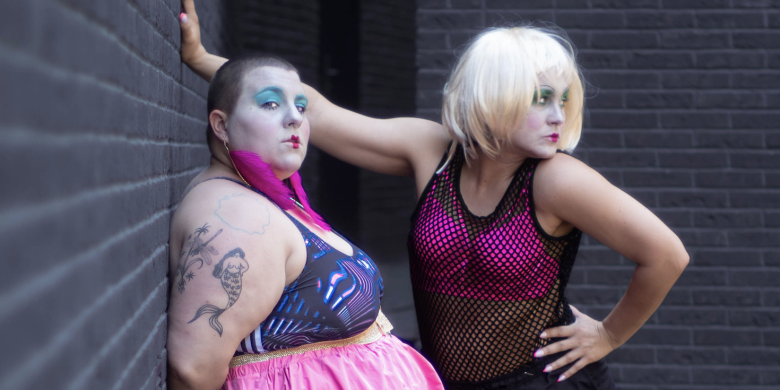
The third and final part of the „Very” trilogy, following Very Funny and Very Sad, created by the duo Gruba i Głupia (Fat and Foolish).A stage cabaret-treatise on the paradoxes of capitalism and the price of art, in which two freelance artists try on the masks of Shakespearean (and not only!) sex workers. Through this, they seek to uncover the parallels between sex work and independent artistic creation — both revolving around the constant offering of new “products” to “clients”: producers and curators.Both art and sex work, though operating on the margins of the economy, are treated as commodities under capitalism. Both rely on generating lucrative goods: authenticity and intimacy, creativity and desire.

Script, Direction, Choreography, Dramaturgy, Video, Costumes:
Gruba i Głupia (Fat and Foolish) — Patrycja Kowańska / Dominika Knapik

Music: Szymon Lechowicz

Lighting Design & Technical Direction: Wolfgang Macher

Performance: Gruba i Głupia — Patrycja Kowańska / Dominika Knapik

COMPETITION PERFORMANCES

One Hundred Falls

One Hundred Falls

Civilizations fall. Cultures collapse. Authorities crumble. We fall — morally, physically.It seems that the entire history of humankind is composed of sudden downfalls — wars, revolutions — but also slow, ignored declines, like the climate catastrophe. It’s hard to tell when a fall is still a tragedy, and when it becomes a new possibility.206 bones and around 640 muscles help us get back up. From the prenatal stage, our development is directed toward building a structure. One that lets us stand upright and resist what is inevitable. And yet, collapse is its ultimate purpose.

Our protagonist loses herself in a dance upon a fallen civilization, a fallen culture, fallen authorities, and our moral decline — and in doing so, finds acceptance in her own falling body.

Concept: Jakub Mędrzycki

Choreography: Jakub Mędrzycki, Ilona Gumowska

Performance: Ilona Gumowska

Music: Marta Forsberg, Gieorgij Puchalski

Duration: 35 minutes

7

The performance explores the power of choice and its consequences through the lens of the seven deadly sins.At the heart of the story are a man and a woman whose chance encounter leads them into trials shaped by envy, wrath, pride, greed, sloth, gluttony, and lust. Each sin is revealed through expressive and dramatic dance scenes, emphasizing that any path can be changed by making the right decision.

Direction, Choreography, Lighting Design: Andrei Kamarou

Music: Leszek Kołodziejski

Cast: Students of the University of Humanities and Economics in Łódź

Duration: 30 minutes

7
Projekt bez nazwy

WHOFRAMEDTHETHINGS

This performance by Ana Kuszarecka is an attempt to engage in dialogue with the standards and expectations imposed on the body — by recognizing and reconstructing them.
This metamorphosis shapes the world around us, shifting the boundaries of imagination into material reality. It navigates between the recognizable and the unrecognizable, through bodily images that imprint themselves on identity. It is about entering and exiting the frames we might be trapped in. Look at the body as a vast database.

Choreography and Performance: Ana Kuszarecka

Dramaturgical Support: Rodia Vomvolo

Costume: Mariola Homoncik

Music: Artificial Biosphere – Igor Dyachenko, Call – Zamilska

Duration: 15 minutes

 This performance contains strobe lighting.

Plemię (Tribe)

I, you, we, you, they.

I, you, we.

I, you.

I, I, I…

In today’s world, the “we” has lost its meaning. Western society is a collection of autonomous individuals. The ancient tribe that once shaped human life for millennia has vanished. Or has it?
Perhaps we are still connected — by something intangible. There is still the mysterious realm of dreams, a thread weaving images that travel from me to you. A collective space where the “I” dissolves into you, we, you (plural), they — and where time flows differently.This is cyclical time, mythical, nonlinear, archetypal — where the path forward leads toward the past, confronting us with something greater than the self. The dream envelops us, dripping like water, washing away the “I” like waves. It is endless, beautiful, threatening, oppressive — stripping and granting identity, much like the collective itself. A journey through eternity — a “little death” of the ego.

Direction & Choreography: Patrycja Neumann

Music: Michał Rudkowski

Duration: 17 minutes

Plemię
Duet on cello, piano & a heartbeat

Duet on cello, piano & a heartbeat

This work is a poetic reflection on loss — an attempt to capture the melancholy of passing time, where past and present intertwine.

Choreography and Performance: Kacper Szklarski, Katarzyna Leszek

Costumes: Klaudia Ostrega

Duration: 10 minutes

De (la) Pressure

When you want your body to move, but it stands still — like stone.

If only that fear wasn’t there, the one that makes you nauseous…

I miss the whiteness in my teeth and in myself to once again become a blank page on which anything can be written.

A story about searching for life within a sick body — a body weighed down by the pressure of expectations, yet taking its first steps forward to confront the demons of the past.
The action unfolds in Lower Silesia, where the environment is dying under the burden of pollution and the indifference of its inhabitants.

Salt, salt, salt —
the salt of the earth is your breath and your thoughts.

……………………………………………………………………………

Direction & Performance: Marta Mańka

Duration: 35 minutes

DE(la)PRESJA
Touch me

Touch me

A performance inspired by the sense of touch.
We explore its many forms, restore its importance, and open a dialogue about this often “forbidden” sense — one that, in today’s digital world, is increasingly pushed aside. The fusion of technology, nature, art, and interaction creates an immersive audiovisual experience, where every movement of the dancers becomes a trigger for generating sound.

Choreography & Concept: Angelika Bosacka, Eliza Bilska, Nadine Gregor

Set & Costume

Design: Magdalena Wolak

Music: Filip Wydma

Lighting Design: Sylwia Hefczyńska-Lewandowska, Krzysztof Urban

Duration: 30 minutes

Przecież ja żyję jeszcze (But I’m Still Alive)

Inspired by Weronika Murek’s book Growing Southern Plants Using the Michurin Method

That it’s hard to remember his voice and his smile?
That you have to wear black to a funeral?
That the mass must be held — because it’s proper — even if he didn’t believe in God?


That now everything — the slippers, the umbrella, the glasses —        is his, even if he never used them?
That maybe she didn’t love him, because she only shed three tears?In this imagining, the dead mourn themselves.
They try to keep living — again and again — until they run out of breath.And after Grandpa died, Grandma said: “One must die someday.” And she’s probably right. She’s an old lady — and when     it comes to death, I’ll trust old ladies forever.

Direction and Choreography: Aniela Turkot

Cast: Aleksandra Heral, Zuzanna Meyer, Aniela Turkot, Zofia Żwirblińska (understudy)

Duration: 25 minutes

IMG-20240906-WA0004 (002)
[FM_form id="1"]